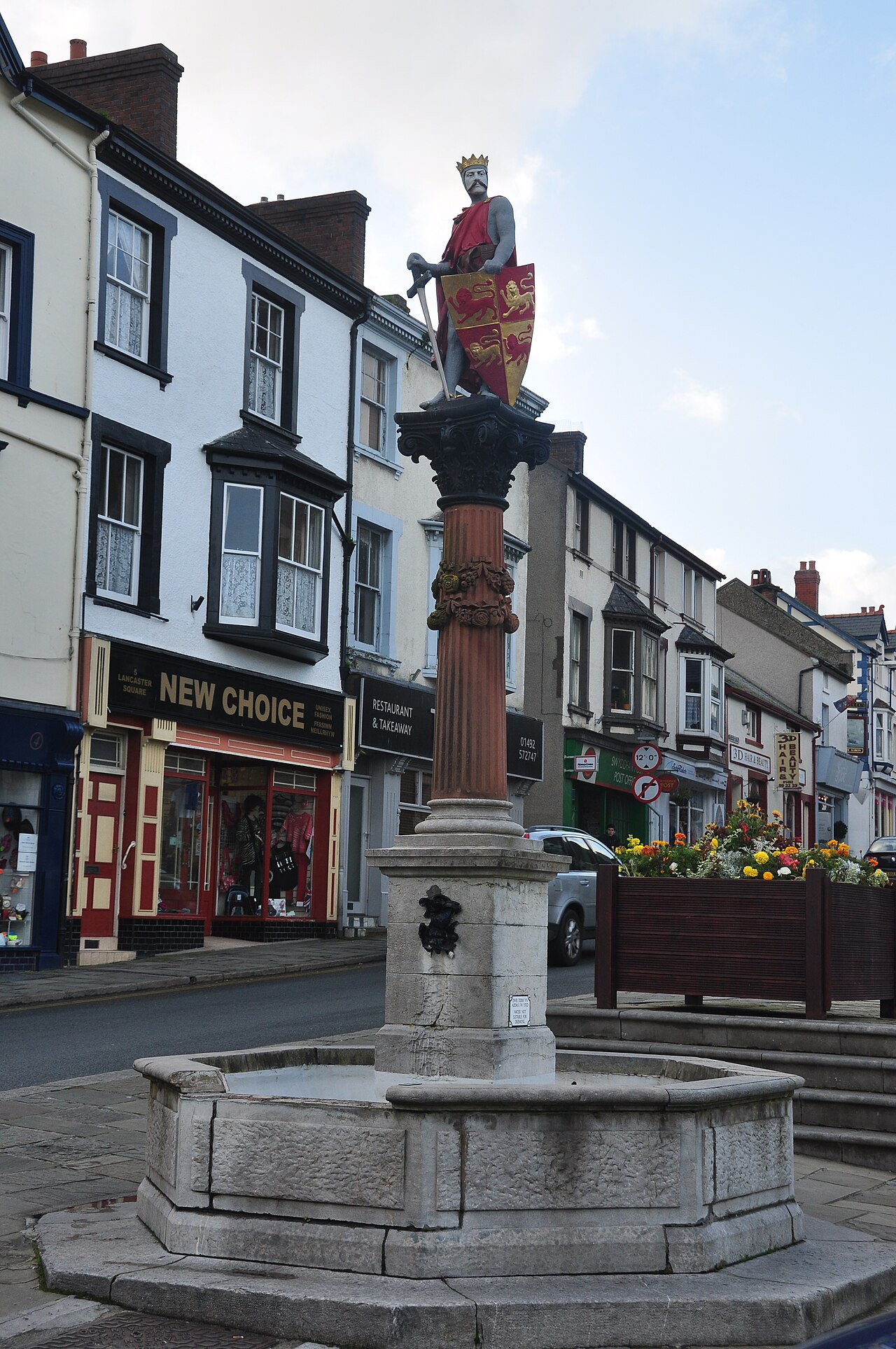
Llywelyn ab Iorwerth, known as Llywelyn Fawr or Llywelyn the Great, was the most powerful Welsh ruler of the Middle Ages. For much of the early 13th century he governed most of Wales from his heartland in Gwynedd, with the mountains of Eryri as his fortress.
Rise to power
Born around 1173, Llywelyn was a grandson of Owain Gwynedd. After years of family rivalry he had taken control of Gwynedd by around 1200, and spent the next four decades extending his authority across Wales by war, diplomacy and marriage.
Marriage and diplomacy
In 1205 he married Joan, a daughter of King John of England. Relations with John swung between alliance and war: in 1211 John invaded Gwynedd and forced harsh terms, but Llywelyn recovered quickly and, allied with the barons, won back his lands. Welsh rights were recognised in Magna Carta in 1215.
Castles of Eryri
Llywelyn built or strengthened the native Welsh castles that still guard the valleys today, including Dolwyddelan, Dolbadarn above Llyn Padarn, and Castell y Bere near Cadair Idris. Unlike the later English castles, they were built to command mountain passes rather than to dominate towns.
Joan and the scandal of 1230
Joan, known in Welsh as Siwan, was more than a political bride. She acted as Llywelyn’s envoy to the English court and helped negotiate peace more than once. In 1230 Llywelyn discovered her in an affair with William de Braose, a powerful Marcher lord held at his court, and had de Braose publicly hanged. Remarkably, Joan was restored to favour, and when she died in 1237 Llywelyn founded a friary at Llanfaes on Anglesey in her memory. Her stone coffin survives today in the church at Beaumaris.
The succession
Llywelyn worked hard to make Dafydd, his son with Joan, his sole heir, breaking with the Welsh custom of dividing land between all sons. It left his elder son Gruffudd bitter. After Llywelyn’s death Gruffudd was handed to the English and held in the Tower of London, where he died in 1244 trying to escape down a rope of knotted sheets. Gruffudd’s son was Llywelyn ap Gruffudd.
Death and legacy
Llywelyn died in 1240 at the abbey of Aberconwy, where he was buried. His body has long since been lost, but after the dissolution of the monasteries his empty stone coffin was taken to Llanrwst, and it can still be seen in the Gwydir Chapel of St Grwst’s Church. He is also the prince in the legend of Gelert. His grandson, Llywelyn ap Gruffudd, would become the last native Prince of Wales.
A prince between two kings
After King John’s death in 1216, Llywelyn secured his gains with the Treaty of Worcester in 1218, in which the English crown accepted his rule over much of Wales. For the rest of his life he was the dominant figure in Welsh politics, holding the other Welsh rulers to him through loyalty, marriage and force, and dealing with Henry III almost as an equal.
Where to find him today
Aberconwy Abbey, where Llywelyn was buried, was moved upstream to Maenan by Edward I to make way for his new castle and town at Conwy. The parish church of St Mary in Conwy stands on the site of the abbey church. Llywelyn also appears in Welsh poetry of his own day, when the court poets hailed him as the protector of Gwynedd. A statue of him stands in Lancaster Square in Conwy.
See it for yourself
- Dolwyddelan Castle, in the Lledr valley between Betws-y-Coed and Blaenau Ffestiniog
- Dolbadarn Castle, Llanberis
- Llywelyn’s coffin, St Grwst’s Church, Llanrwst