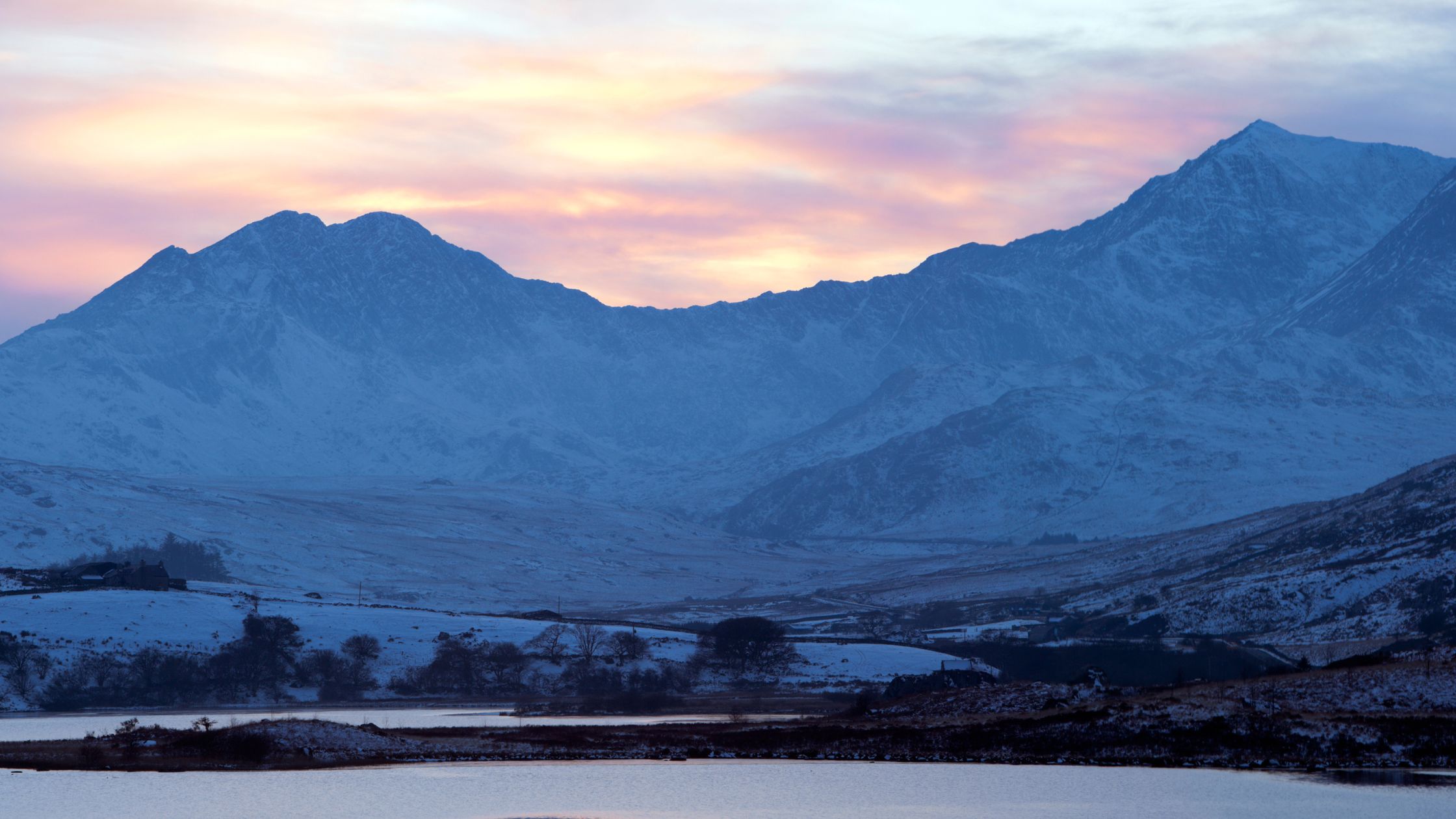
When snow settles on the high tops, Eryri (Snowdonia) becomes a different place. The paths you walked in summer turn into hard snow and ice, the days are short, and the wind on the summit ridges can knock you off your feet. Winter on Yr Wyddfa (Snowdon) and its neighbours can be magnificent, but it is proper mountaineering, and every year Mountain Rescue teams are called out to walkers who set off with summer kit and summer expectations. This guide covers the essentials of staying safe on the mountains of Eryri in winter. For routes and planning, see our winter walking guide.
Snow and ice on Yr Wyddfa
The Eryri National Park Authority is blunt about it: it is impossible to reach the summit of Yr Wyddfa in winter conditions without specialised equipment and the knowledge to use it. Compacted snow on the main paths becomes extremely slippery, and a slip on a steep slope can quickly turn into a long, fast slide.
Some places are known trouble spots. The upper zigzags where the Pyg Track and Miners’ Track climb to the ridge hold steep snow, and in 2014 an avalanche injured a walker on the upper Pyg Track. Near the summit, the line of the railway passes close to the cliffs of Clogwyn Coch, where deep, icy snow banks up above a big drop. Llanberis Mountain Rescue Team describe it as an accident blackspot that has killed several walkers, and advise using the Llanberis Path rather than following the railway.
Remember too that in winter there is no train and no café at the top. The Snowdon Mountain Railway runs from around late March to late October, and the summit visitor centre is closed outside its season. Once you are up there, you are on your own.
Ice axe and crampons, and the skill to use them
An ice axe and crampons are essential above the snowline, but carrying them is not the same as being able to use them. You need to know how to fit crampons properly to your boots, how to walk in them without tripping, and how to use an axe to cut steps and to stop yourself if you fall (self-arrest). These skills need practice on safe ground before you rely on them on a real slope.
Check that your boots are stiff enough to take crampons. Flexible summer walking boots and lightweight trainers are not suitable. Microspikes can help on icy low-level paths, but they are not a substitute for crampons on steep mountain ground.
Other winter kit worth carrying (our seasonal kit list has the full version):
- Warm layers, a windproof and waterproof shell, and spare gloves (wet gloves are useless).
- Hat, buff and goggles for driving snow and spindrift.
- Map and compass, plus the skills to use them in poor visibility. Paths disappear under snow.
- A headtorch with spare batteries.
- Food, a hot drink and a group shelter or bivvy bag.
- A fully charged phone, kept warm, as cold drains batteries fast.
Short days
In midwinter it can be getting dark by around four in the afternoon, and progress in snow is far slower than in summer. Start early, set a firm turnaround time and stick to it whatever the distance to the top. If you are caught out, our piece on Yr Wyddfa after dark covers head-torch safety. The Park Authority’s routes take four to seven hours in good summer conditions. In winter they can take much longer, and descending is often harder than going up.
Check the forecast and conditions
Mountain weather in Eryri changes fast, and the valley forecast tells you little about what is happening at 1,000 metres. Before every winter trip, check:
- The Met Office mountain forecast for Snowdonia, which covers summit temperatures, wind and freezing levels.
- The Mountain Weather Information Service (MWIS), which publishes a Snowdonia National Park forecast.
- The Eryri National Park Authority’s Yr Wyddfa Ground Conditions Reports, published daily in winter by the wardens, describing snow, ice and other hazards on the mountain.
Pay close attention to wind speed. Strong winds on an exposed ridge in winter are dangerous on their own, and combined with ice and low cloud they are a reason to change your plans completely. The free AdventureSmart site is also a good place to start planning.
Avalanche awareness
People are often surprised that avalanches happen in Wales, but they do. Wind blows snow onto sheltered, steep slopes and into gullies, where it can build up into unstable slabs. Unlike Scotland, Eryri does not have its own dedicated avalanche forecasting service, so you need to read the ground for yourself, using the forecast and the Ground Conditions Reports to understand recent snowfall and wind direction.
As a rule, be wary of steep slopes and gullies after heavy snow or strong winds, of slopes where snow has drifted, and of rapid thaws. If in doubt, choose a different route or turn back. An avalanche awareness session is part of most good winter skills courses.
Learn the skills: winter courses
The best investment you can make is a winter skills course. Plas y Brenin, the National Outdoor Centre at Capel Curig, runs a two-day Welsh Winter Skills course for people with some summer hillwalking experience but no winter background. It covers choosing and fitting crampons, ice axe techniques including self-arrest, winter navigation, avalanche awareness, what to wear and carry, and what to do in an emergency, with a ratio of one instructor to six. Snow is never guaranteed in Wales, but the course runs either way. You can find details on the Plas y Brenin website.
Local qualified mountain leaders and guides also offer winter days, which can be a good way to learn on routes you want to do.
Skiing and snow sports
When the snow is good, a few experienced ski tourers head into the high mountains of Eryri, but there are no lifts, no pistes and no patrol, and everything above applies twice over. You can read more about skiing in Snowdonia and off-season training in North Wales on WalesLive. For most people, a winter in Eryri is about walking, and the downhill skiing happens in the Alps, whether that is a family week or one of the catered ski chalets in Val Thorens. Time spent on winter skills in Wales is useful preparation for either.
In an emergency
Call 999 and ask for the Police, then Mountain Rescue. Be ready to give your location (a grid reference if you can), your name, the nature of the problem or injuries, the size of your group and your mobile number. Keep your phone switched on and warm afterwards so the team can call you back. If you have hearing or speech difficulties, register for emergency SMS before your trip by texting “register” to 999.
Mountain Rescue teams in Eryri are volunteers. The best way to thank them is to not need them. Our guide to staying safe on Yr Wyddfa covers what to do if things go wrong.
Byddwch yn ddiogel (stay safe), and if you are new to winter walking, our guides to the routes on Yr Wyddfa and our first-time visitors guide are a good place to start planning for the warmer months too.
FAQ
Can I walk up Yr Wyddfa in winter?
Yes, if you have the right equipment, the skills to use it and suitable conditions. The National Park Authority says the summit cannot be reached in winter conditions without specialised equipment such as an ice axe and crampons.
Is there an avalanche forecast for Snowdonia?
Eryri does not have a dedicated avalanche forecasting service like Scotland’s. Use the Met Office and MWIS mountain forecasts together with the National Park’s Ground Conditions Reports, and learn to assess slopes on a winter skills course.
Does the Snowdon Mountain Railway run in winter?
No. The railway runs from around late March to late October, and the summit visitor centre is closed in winter.
Where can I learn winter skills in North Wales?
Plas y Brenin at Capel Curig runs winter skills courses each season, and local qualified mountain guides offer private and group winter days.


