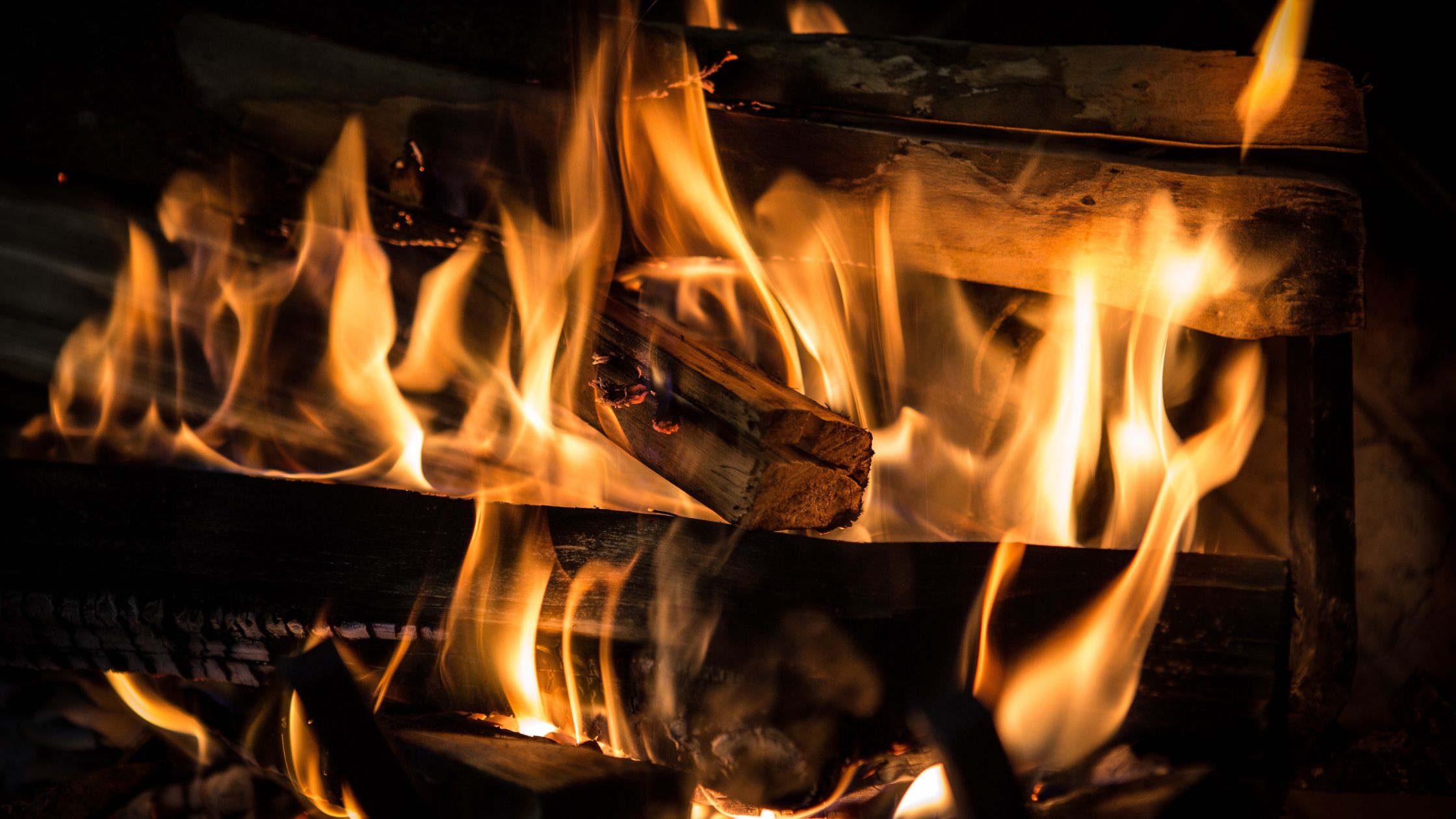
A wood burner is part of life in Eryri (Snowdonia). Stone cottages in the valleys hold the damp, winter evenings draw in early, and plenty of homes and holiday lets rely on a stove for at least part of their heat. Whether you live here year round or run a holiday cottage, the fuel you put in that stove makes a bigger difference than most people realise: to how warm the room gets, to your chimney, and to the air in the village.
Why dry wood matters
Freshly felled wood can be around half water by weight. When you burn it, much of the fire’s energy goes into boiling that water off rather than heating the room. The result is a smoky, sulky fire, blackened stove glass and tar building up in the flue.
The widely used benchmark for burning wood at home is a moisture content of 20% or less. That is the figure behind the Ready to Burn certification you will see on bags of logs, and it is the level suppliers and stove makers recommend.
- More heat per log: less water to drive off means more warmth from the same amount of wood.
- Easier lighting: dry wood catches quickly with a little kindling.
- Cleaner chimney: wet wood produces more creosote and soot, which raises the risk of a chimney fire.
- Less smoke: better for neighbours, and for the valley on a still winter evening when smoke hangs low.
Seasoned or kiln-dried?
You can season logs yourself by splitting them, stacking them off the ground under cover with air moving through, and leaving them for a year or more. In a wet climate like ours, that takes patience and decent storage, and the results can be patchy.
Kiln-dried logs are dried in a controlled kiln, so they arrive ready to burn and consistently dry all the way through. For a holiday cottage in particular, where guests will simply pick up whatever is in the log basket, that consistency is worth a lot. In the Conwy Valley, Conwy Valley Logs at Llanddoged near Llanrwst supply kiln-dried hardwood and kiln-dried loose softwood logs, delivered in bulk bags, which suits owners who want to fill a log store in one go.
Hardwood or softwood?
Hardwood (such as ash, oak or birch) is denser, so it burns longer and suits a stove that runs through an evening. Softwood lights fast and burns hot, which makes it good for getting a fire going, for pizza ovens and for fire pits. Many households keep a mix: softwood to start, hardwood to keep it going.
The rules in Wales
England has had legal restrictions on selling wet wood in small quantities since 2021. Wales has consulted on similar measures, but at the time of writing has not brought in the same law, so it is worth buying from a supplier who tells you the moisture content and, ideally, uses Ready to Burn certification.
Separately, some towns have smoke control areas under the Clean Air Act 1993. Inside one, you can only burn wood on an exempt (approved) appliance. Most rural Eryri is not covered, but if your property is in or near a town, check with Cyngor Gwynedd or Conwy County Borough Council before you install or use a stove.
Running a stove in a holiday let
Guests who have never lit a wood burner are one of the commonest causes of smoky rooms and cold cottages. A few simple steps make life easier for everyone:
- Leave clear instructions by the stove: how to open the air vents, how much to load, and what not to burn (no treated timber, packaging or wet wood).
- Stock dry logs and kindling indoors or in a covered store near the door, so nobody has to fetch wood from a soaking pile in the rain.
- Fit a carbon monoxide alarm in the room with the stove and test it between bookings. Have smoke alarms on every floor.
- Use a registered installer: new stoves should be fitted by a HETAS-registered installer or signed off by building control.
- Sweep the chimney at least once a year, and more often if the stove is used heavily. Many insurers ask for proof.
- Provide a fireguard and tools, and a metal bucket for ash, which can stay hot for a day or more.
If you are choosing a cottage rather than running one, our guide to where to stay in Eryri is a good place to start, and the Betws-y-Coed guide covers one of the best bases for a winter break with a fire to come back to. For festive ideas, see Christmas in Betws-y-Coed.
Storing logs in a wet climate
Even kiln-dried logs will take on moisture if they are left out in the rain, and this is a part of Wales that gets plenty of it (our guide to flood risk in Eryri covers the wider picture for cottage owners). Keep logs:
- Off the ground, on a pallet or slatted floor.
- Under a roof, with open sides so air can move through.
- Away from the house wall where possible, to avoid damp and insects.
- A few days’ supply indoors, so they are warm and dry when they go on the fire.
A cheap moisture meter is a good investment if you season your own wood or buy from different sources. Split a log and test the fresh face: under 20% and it is ready.
A local choice
Buying fuel from a Welsh supplier keeps money in the local economy and cuts the distance your logs travel. It also means you can ask questions directly: where the wood comes from, how it was dried and when it can be delivered. Diolch (thank you) goes a long way when the delivery driver has tackled a narrow lane to reach you.
Frequently asked questions
What moisture content should firewood be?
20% or less is the accepted benchmark for burning wood in a domestic stove or open fire. Kiln-dried logs are usually well under that.
Is it illegal to burn wet wood in Wales?
Burning wet wood is not in itself illegal, but it is inefficient and polluting. Inside a smoke control area, you must use an exempt appliance to burn wood at all. Check with your local council if you are unsure.
Can I store kiln-dried logs indoors?
Yes. Because they are dry, they are much less likely to bring damp or mould inside. Keep a few days’ worth by the stove and the rest in a covered store.
How often should a chimney be swept?
At least once a year for a wood burner, and more often with heavy use. Burning dry wood keeps deposits down between sweeps.


